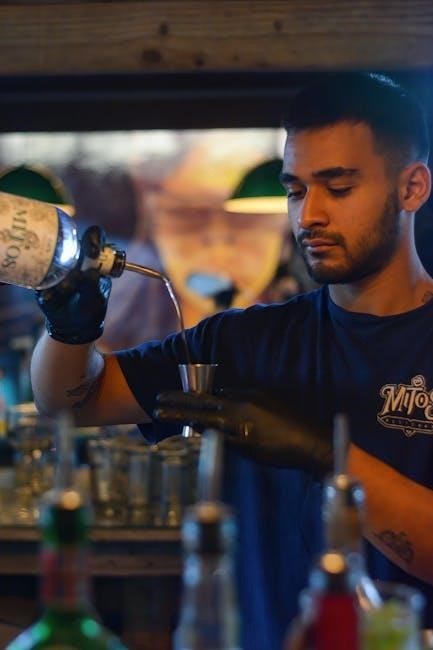
Bartender training programs, updated for 2025, focus on mastering classic cocktails with professional techniques and understanding bar operations․
A course provides knowledge of cocktails, bar procedures, sanitation, and customer service, preparing individuals for a thriving hospitality career․
The curriculum includes opening/closing procedures, mixology of over 200 drinks, and gaining skills for high-standard customer interactions․
Apprentice programs, like Union Local 165’s, combine cocktail mastery with in-depth spirits and beer knowledge over several weeks․
Overview of the Bartending Profession
Bartending is a dynamic profession blending hospitality, mixology, and customer interaction, demanding both skill and personality․ Successful bartenders require extensive product knowledge—spirits, beers, wines—and proficiency in crafting diverse cocktails․
Beyond drink preparation, the role encompasses bar maintenance, inventory control, and responsible alcohol service, adhering to legal regulations․
Formal training, like certification courses, provides a foundation in these areas, accelerating career advancement within the industry and opening doors to specialized roles․
Importance of Formal Training
Formal bartender training delivers a structured learning experience, surpassing on-the-job experience in foundational knowledge․ Courses cover essential techniques—mixology, sanitation, responsible service—and build confidence behind the bar․
Certification enhances credibility, demonstrating commitment to professional standards and increasing employability․
A solid curriculum equips individuals with the skills to efficiently manage bar operations, minimize waste, and provide exceptional customer service, leading to faster career progression․
Bar Hygiene and Sanitation
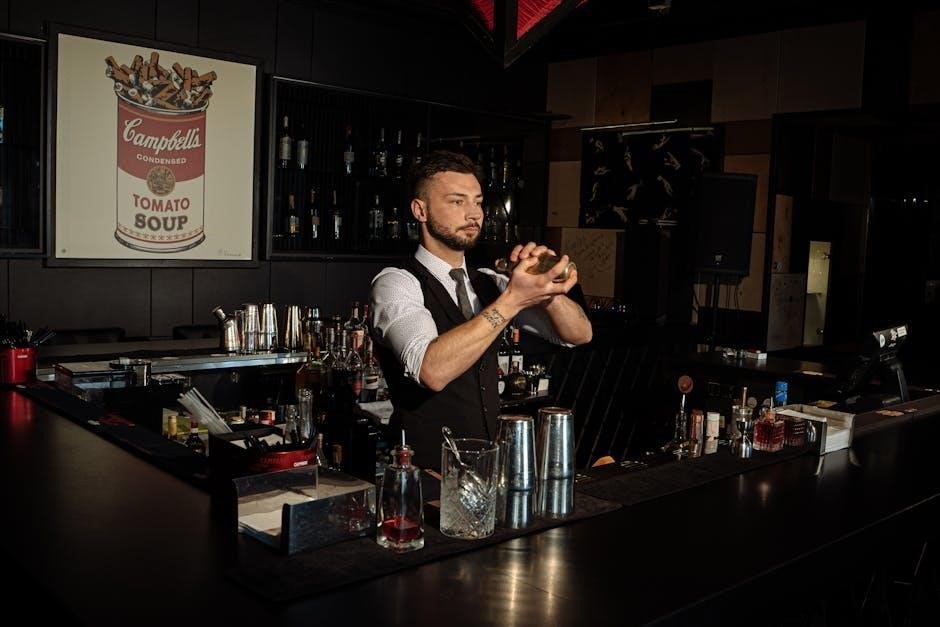
Bartending courses emphasize hygiene and sanitation, covering standard restaurant procedures and proper cleaning/operating techniques for bars and equipment․
Maintaining a clean workstation is crucial, alongside understanding sanitation protocols for a safe and compliant bar environment․
Maintaining a Clean Workstation
Effective workstation maintenance is paramount in bartending, demanding consistent cleaning throughout service․ This includes immediate spill cleanup, regular surface sanitization, and diligent removal of debris․
Proper organization minimizes contamination risks and maximizes efficiency; tools should be readily accessible yet neatly arranged․ A clean station demonstrates professionalism and upholds health standards, ensuring customer safety and satisfaction․
Proper Glassware Handling
Correct glassware handling is crucial for presentation and hygiene․ Bartenders must inspect glasses for chips or cracks before use, discarding any damaged items immediately․ Proper washing and polishing techniques prevent spotting and ensure cleanliness․
Handling glasses by the base or stem avoids lip contact, maintaining sanitation․ Careful stacking and storage prevent breakage, minimizing waste and ensuring a professional bar appearance․
Alcoholic Beverage Regulations & Responsible Service
Comprehensive training on age verification procedures is essential, requiring diligent ID checks to prevent underage drinking․ Recognizing signs of intoxication and refusing service to impaired individuals are paramount responsibilities․
Bartenders must understand local laws regarding alcohol service, including hours and permissible practices, promoting responsible consumption and avoiding legal repercussions․
Essential Bartending Tools and Equipment
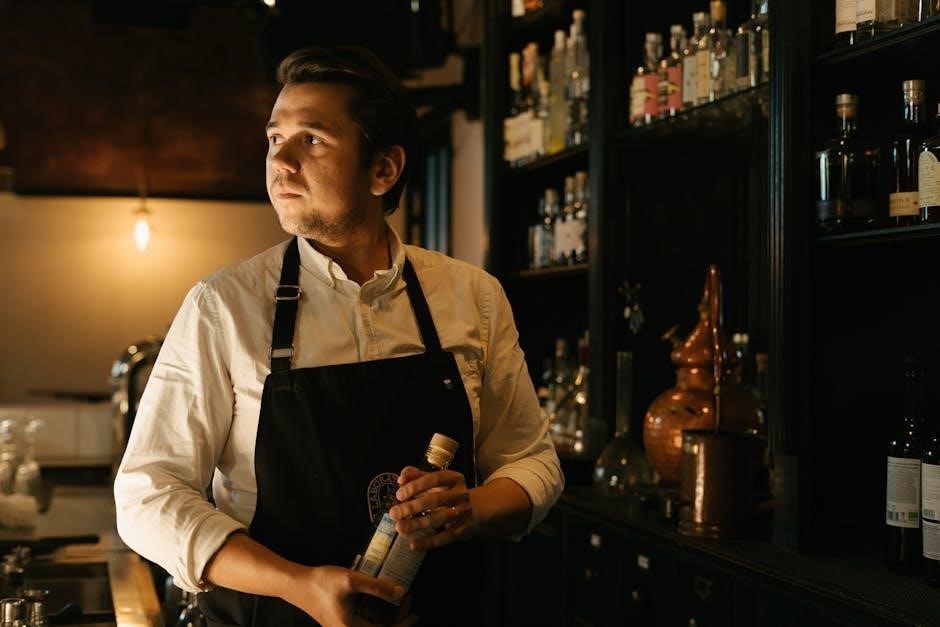
Training emphasizes understanding bar tools like jiggers and strainers, alongside operating equipment such as ice machines and blenders efficiently․
Mastering these tools is crucial for consistent drink preparation and maintaining a smooth, professional bar service workflow․
Understanding Bar Tools: Jiggers, Strainers, etc․
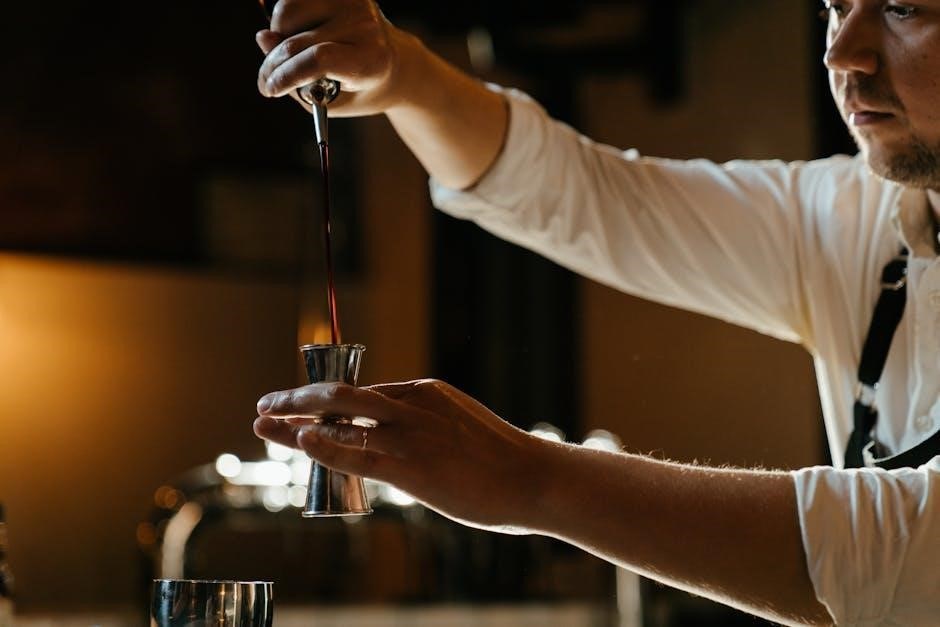
Comprehensive training covers essential bar tools, starting with jiggers for precise measurements, ensuring consistent cocktail balance․
Various strainers – Hawthorne, Julep, and fine mesh – are explored for achieving clarity and texture in drinks․
Bar spoons, muddlers, and channel knives are also detailed, alongside their specific applications in mixology․
Proper tool handling and maintenance are emphasized for longevity and optimal performance behind the bar․
Operating Bar Equipment: Ice Machines, Blenders
Effective bartender training includes safe and efficient operation of essential equipment like ice machines, crucial for drink quality․
Proper cleaning and maintenance procedures are detailed to ensure hygiene and prevent malfunctions, extending equipment lifespan․
Blender operation, covering speed settings and techniques for various frozen cocktails, is thoroughly demonstrated․
Understanding equipment capabilities and limitations is vital for consistent drink preparation and avoiding costly repairs․
Classic Cocktail Families & Recipes
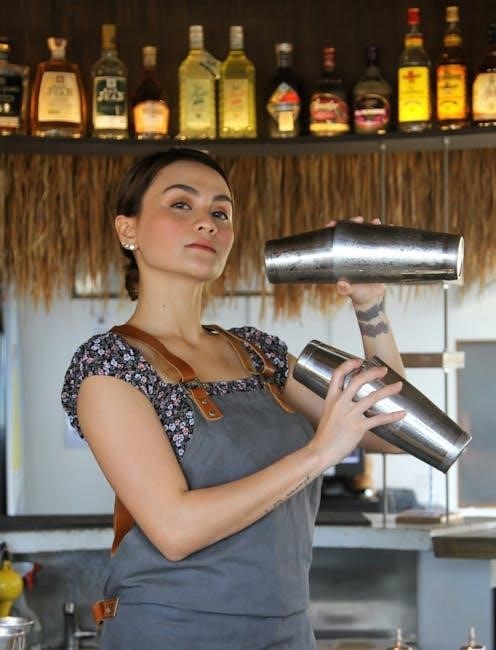
Bartending courses emphasize mastering popular classic cocktails with professional style and technique, covering sours, highballs, and martinis․
Students learn to prepare over 200 drinks, including wine and coffee, gaining a comprehensive mixology skillset․
Sours Cocktails: Whiskey Sour, Daiquiri
Sours represent a foundational cocktail family, balancing spirit, citrus, and sweetener—essential for any bartender’s repertoire․
Training focuses on precise ratios for classics like the Whiskey Sour, utilizing bourbon or rye, lemon juice, and sugar․
The Daiquiri, a simpler sour, showcases rum, lime, and sugar, demanding perfect balance and chilling techniques․
Mastering these builds understanding of flavor profiles and allows for creative sour variations, a key skill for mixologists․
Highballs & Collins: Gin & Tonic, Tom Collins
Highballs and Collins drinks are refreshing, simple serves, crucial for speed and volume behind the bar, requiring precise pouring skills․
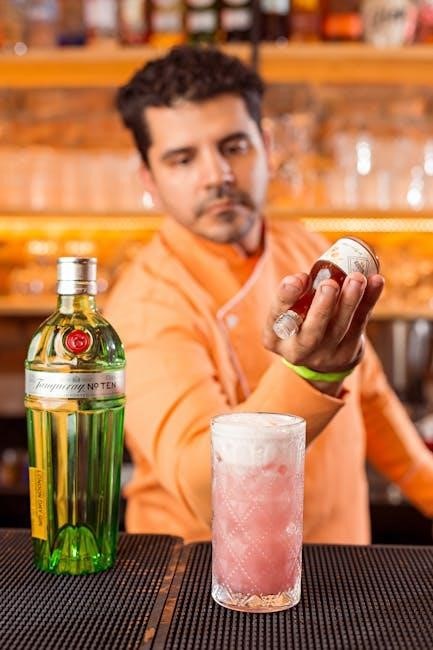
The Gin & Tonic, a classic highball, emphasizes quality gin and tonic water, alongside proper garnish techniques for enhanced aroma․
The Tom Collins, a Collins variation, adds lemon juice and sugar to gin and soda, demanding balanced sweetness and effervescence․
Training emphasizes consistent builds and understanding how carbonation impacts the final drink experience for customer satisfaction․
Martini Family: Dry Martini, Dirty Martini
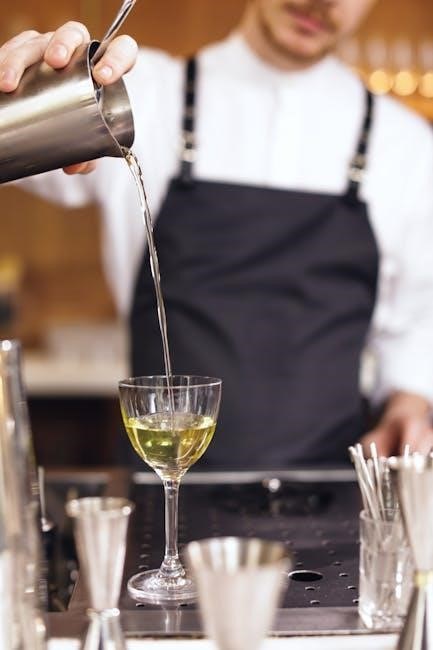
Martinis represent bartending precision, demanding mastery of stirring techniques and understanding spirit-to-vermouth ratios for balance․
The Dry Martini, classically gin or vodka-based, showcases dryness levels, requiring accurate ingredient measurement and chilling proficiency․
The Dirty Martini introduces olive brine, demanding careful control to avoid overpowering the spirit, and proper olive garnish selection․
Training focuses on customization, recognizing guest preferences, and achieving perfect dilution for an exceptional Martini experience․
Spirits Knowledge
Spirits training covers production, characteristics, and usage of whiskey, vodka, gin, and rum, alongside liqueurs and aperitifs․
Understanding flavor profiles and origins is crucial for informed recommendations and crafting balanced cocktails for discerning guests․
Whiskey Varieties: Bourbon, Scotch, Rye
Comprehensive whiskey education is vital, differentiating Bourbon—American-made, corn-based, aged in new oak—from Scotch, originating in Scotland with diverse regional styles․
Rye whiskey, another American variety, utilizes rye grain, offering a spicier profile; bartenders must understand these nuances for informed recommendations․
Knowing production methods, aging processes, and flavor characteristics elevates service and cocktail creation․
Vodka, Gin & Rum: Production & Characteristics
Bartenders require detailed knowledge of vodka—often grain-based, neutral in flavor—gin, infused with botanicals like juniper, and rum, derived from sugarcane molasses or juice․
Understanding distillation processes, regional variations (e․g․, Jamaican rum vs․ Cuban rum), and flavor profiles is crucial for cocktail pairings․
Mastering these spirits enhances drink recommendations and overall customer experience․
Liqueurs & Aperitifs: Usage & Flavor Profiles
Bartenders must understand liqueurs – sweetened, flavored spirits – and aperitifs, designed to stimulate appetite before meals․
Knowledge of diverse flavor profiles, from citrusy Cointreau to herbal Chartreuse, is essential for cocktail creation and modification․
Proper usage elevates drink complexity and caters to individual preferences․
Beer and Wine Fundamentals
Bartenders should grasp beer styles – lagers, ales, stouts – and wine basics: red, white, rosé, and sparkling varieties․
Understanding key skills, like cleaning and wine service, is crucial for providing excellent customer experiences․
Beer Styles: Lagers, Ales, Stouts
Comprehensive beer knowledge is vital for any bartender; understanding the nuances between lagers, ales, and stouts elevates service․
Lagers, typically crisp and clean, are bottom-fermented, while ales, often fruitier and more complex, utilize top fermentation․
Stouts, a dark ale variant, boast roasted malt flavors, ranging from dry Irish stouts to sweet milk stouts․
Knowing these distinctions allows for informed recommendations and enhances the customer’s overall enjoyment․
Wine Basics: Red, White, Rosé, Sparkling
Fundamental wine knowledge is crucial for a well-rounded bartender, encompassing red, white, rosé, and sparkling varieties;
Red wines, derived from dark grapes, offer bold flavors, while white wines, from lighter grapes, are typically crisp and refreshing․
Rosé wines blend characteristics of both, and sparkling wines, like Champagne, feature effervescence․
Understanding these basics enables informed pairings and elevates the customer experience with confident recommendations․

Mixology Techniques
Essential techniques include muddling, shaking, and stirring, each impacting a cocktail’s texture and flavor profile․
Layering and garnishing enhance visual appeal and contribute to the overall drinking experience, showcasing skill and creativity․
Muddling, Shaking, Stirring
Muddling gently extracts flavors from fruits and herbs, crucial for drinks like Mojitos; avoid over-muddling, which releases bitter compounds․
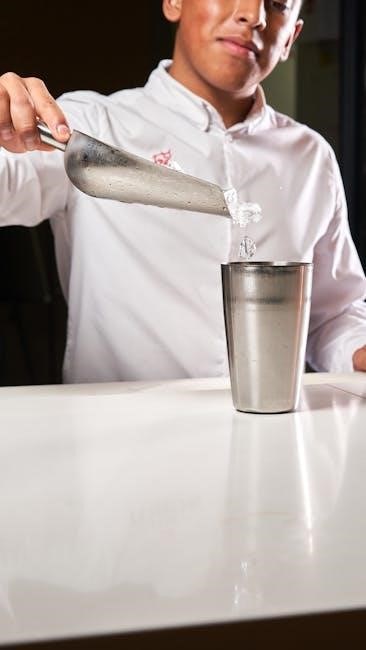
Shaking chills, dilutes, and aerates ingredients, creating a textured cocktail – ideal for juice-based drinks․
Stirring provides a smooth, clear cocktail, preserving the spirit’s body; best for spirit-forward drinks like Martinis, avoiding ice chip inclusion․
Layering & Garnishing Techniques
Layering involves carefully pouring liquids of differing densities to create visually appealing, stratified cocktails, demanding precise technique and control․
Garnishing enhances both the aroma and presentation; citrus twists, fruits, and herbs elevate the drinking experience, adding visual appeal․
Effective garnishes complement the drink’s flavors, demonstrating attention to detail and elevating the overall cocktail artistry and customer perception․
Bar Operations & Customer Service
Training covers opening/closing procedures, efficient order taking using POS systems, and skillful handling of challenging customer interactions for smooth service․
Mastering these skills ensures efficient bar management and positive customer experiences, vital for success in the hospitality industry․
Opening and Closing Procedures
Comprehensive training details meticulous bar preparation, including sanitation checks, stocking essentials, and verifying equipment functionality before service begins․
Closing duties encompass thorough cleaning, secure cash handling, inventory reconciliation, and ensuring all safety protocols are strictly followed․
Efficient procedures minimize downtime, maintain hygiene, and safeguard assets, contributing to a seamless and profitable bar operation․
Proper execution is crucial for consistent quality and a safe environment․
Order Taking & POS Systems
Effective order taking emphasizes attentive listening, accurate repetition, and suggestive selling techniques to enhance the customer experience and increase sales․
Proficiency in POS systems is vital for efficient order entry, modification, and payment processing, minimizing errors and speeding up service․
Training covers navigating the system, handling voids/comps, and generating reports for inventory and sales analysis․
Mastering these skills ensures smooth transactions and customer satisfaction․
Handling Difficult Customers
Bartender training emphasizes de-escalation techniques, active listening, and empathy when addressing customer complaints or challenging behaviors․
Maintaining composure and a professional demeanor is crucial, even under pressure, to resolve issues effectively and prevent escalation․
Strategies include acknowledging concerns, offering sincere apologies, and seeking assistance from management when necessary․
Prioritizing safety and responsible service is paramount in all interactions․
Non-Alcoholic Beverage Preparation
Bartending courses cover mocktail recipes and techniques, alongside coffee and tea service, expanding beverage knowledge and catering to diverse customer preferences․
Mocktail Recipes & Techniques
Comprehensive bartender training emphasizes mastering non-alcoholic creations alongside classic cocktails․ Students learn to build balanced flavors using fresh ingredients, syrups, and creative garnishing․
The curriculum includes techniques for crafting visually appealing and delicious mocktails, catering to health-conscious or non-drinking patrons, and expanding the bar’s offerings․
Focus is placed on replicating cocktail profiles without alcohol, ensuring a satisfying experience for all guests․
Coffee & Tea Service
Bartender training extends beyond alcoholic beverages to encompass proficient coffee and tea service․ The course covers proper brewing methods, understanding different coffee bean varieties, and tea types․
Students learn to prepare espresso-based drinks, hot teas, and iced beverages, alongside appropriate presentation and garnishing techniques․
Knowledge of common coffee and tea customizations ensures excellent customer satisfaction․

Advanced Bartending Skills
Bartending courses introduce flair bartending and signature cocktail creation, building upon foundational skills․ Industry leaders craft the syllabus for advanced techniques․
Developing unique recipes and showmanship elevates the bartender’s expertise and customer experience․
Flair bartending elevates drink preparation into an engaging performance, captivating customers with skillful bottle manipulation and choreographed movements․
Certified bartending courses often include introductory flair techniques, focusing on safe practice and foundational moves like bottle spins and basic throws․
Mastering flair requires dedicated practice, coordination, and a strong understanding of bar safety protocols to prevent accidents and ensure a polished presentation․
Creating Signature Cocktails
Advanced bartending skills encompass developing unique cocktail recipes, showcasing creativity and a deep understanding of flavor profiles․
This involves experimenting with spirits, liqueurs, and fresh ingredients, balancing sweet, sour, and bitter elements to achieve harmonious tastes․
A successful signature cocktail reflects a bar’s identity, offering guests an exclusive experience and demonstrating the bartender’s innovative expertise․
Inventory Management & Cost Control
Effective stock rotation, accurate ordering, and minimizing waste are crucial for profitability․
Bartenders learn to control costs through careful portioning and reducing spillage, maximizing revenue․
Proper inventory practices ensure product freshness and prevent financial losses within the bar environment․
Stock Rotation & Ordering
Training emphasizes the FIFO (First-In, First-Out) method for stock rotation, ensuring older products are used before newer ones, minimizing spoilage and waste․
Bartenders learn to accurately assess par levels, anticipating demand and creating efficient order lists based on sales data and upcoming events․
Understanding supplier lead times and establishing strong vendor relationships are also key components, guaranteeing consistent product availability and competitive pricing․
Minimizing Waste & Spillage
Effective training highlights precise pouring techniques using jiggers, reducing over-pouring and product waste during cocktail preparation and standard drink service․
Bartenders learn proper bottle handling and storage procedures to prevent breakage, alongside spill cleanup protocols to maintain a safe and sanitary workspace․
Implementing portion control and utilizing leftover ingredients creatively, like creating staff drinks, further contributes to cost savings and responsible bar management․
Legal Considerations & Responsible Alcohol Service
Training emphasizes age verification procedures and recognizing intoxication signs to prevent serving underage or impaired patrons, ensuring legal compliance․
Understanding local alcohol beverage regulations and liability laws is crucial for responsible service and maintaining a safe bar environment․
Age Verification Procedures
Comprehensive training details legally acceptable forms of identification, emphasizing the importance of verifying birthdates and authenticity meticulously․
Bartenders must consistently check all patrons who appear under the legal drinking age, utilizing proper scanning techniques and recognizing fraudulent IDs․
Detailed protocols cover handling questionable identification, refusing service politely but firmly, and documenting incidents for legal protection․
Understanding state-specific laws regarding ID acceptance is paramount for responsible alcohol service and avoiding legal repercussions․
Recognizing & Preventing Intoxication
Training emphasizes identifying visible signs of intoxication, including slurred speech, impaired coordination, and altered behavior patterns in patrons․
Bartenders learn to monitor consumption rates, proactively offering water and food, and understanding the effects of different alcohol types․
Protocols detail refusing further service to intoxicated individuals politely but firmly, and arranging safe transportation options for them․
Responsible service requires recognizing vulnerability factors and intervening before situations escalate, prioritizing patron safety and legal compliance․
Bartending Certification & Career Paths
Certifications validate skills and knowledge, enhancing job prospects within the industry, and opening doors to advancement opportunities․
Career paths range from bar management to mixology, with specialized training in flair bartending and signature cocktail creation․
Available Certifications & Their Value
Bartending certifications demonstrate a commitment to professional standards, significantly boosting employability and earning potential․
These credentials validate knowledge of cocktail recipes, responsible alcohol service, and bar operations, providing a competitive edge․
Industry-recognized programs offer comprehensive training, while some states mandate certifications for legal alcohol service․
Acquiring a certification showcases dedication, enhancing career advancement opportunities within the dynamic hospitality sector․
Opportunities for Advancement in the Industry
Bartending offers diverse career paths beyond mixing drinks, including bar management, mixology, and beverage program development․
Experienced bartenders can become head bartenders, overseeing staff and operations, or pursue roles as trainers and consultants․
Flair bartending and signature cocktail creation provide avenues for specialization and increased earning potential․
Further education in hospitality management unlocks leadership positions, while entrepreneurial skills can lead to bar ownership․